What to know
- The Eurosystem launched Pontes on 21 September 2026.
- The service connects tokenized wholesale transactions with central-bank-money settlement.
- Initial functionality and later planned enhancements must be distinguished.
The Eurosystem launched Pontes on 21 September 2026, enabling wholesale transactions in tokenized assets to settle in central bank money. The ECB’s launch release says an initial group of banks and market infrastructures had completed onboarding, while further participants and service enhancements would follow. Full implementation is expected in 2028, so the first release should not be treated as the final feature set.
Why the cash leg deserves its own headline
A tokenized security still needs a way for a buyer to pay a seller. If that payment creates a new exposure the seller does not want, the asset’s digital format has not solved the whole transaction. Pontes addresses that payment-side question by connecting market infrastructure with central-bank-money settlement rather than asking every participant to accept a new private instrument.
The distinction is useful for readers who encounter the broad term digital currency. A wholesale settlement service for financial institutions is different from a retail wallet for the public. The launch does not mean that households can download Pontes or that it creates a new consumer investment product. Its significance lies in the infrastructure behind financial-market transactions.
Integration will determine practical value
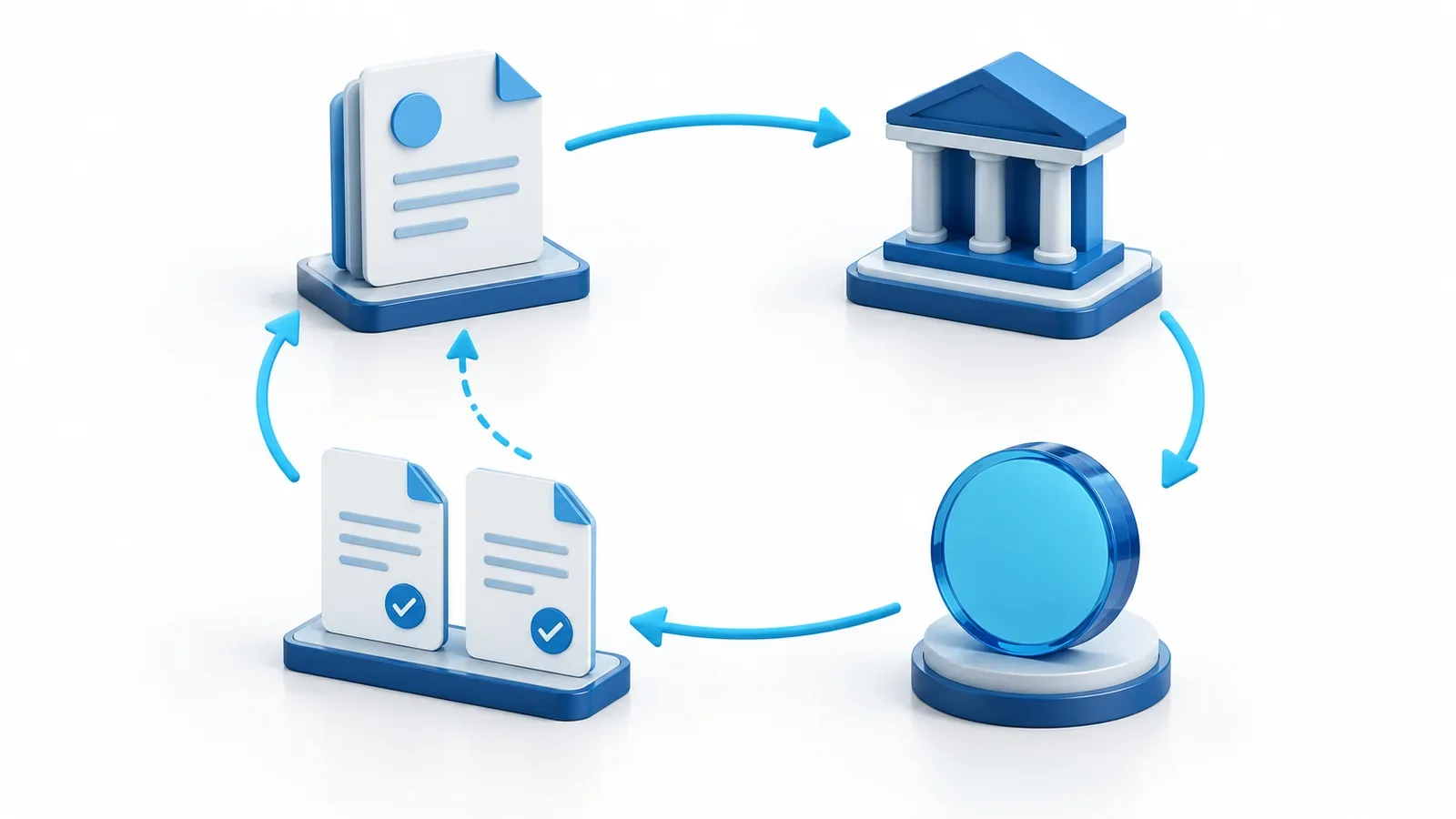
An illustrative securities trade needs agreement about both the asset record and the payment record. The participants must know when each becomes final, how a failed instruction is handled and which system provides authoritative evidence. A bridge is valuable when it reduces these coordination problems without hiding the legal and operational differences between the connected systems.
A reasonable evaluation would therefore examine a completed lifecycle rather than one successful transfer. What happens when an instruction is cancelled before settlement? How does a participant reconcile its books? Can a firm recover cleanly after a connection outage? These questions are editorial criteria for assessing future evidence, not results from an independent test of Pontes.
Initial service and future roadmap are different facts
The ECB describes a gradual approach to participation and functionality. Readers should check the current service documentation before assuming a particular operating schedule, currency capability or automation feature is already available. A roadmap can show direction while leaving important implementation choices unresolved. Conflating it with the live service would overstate what the launch establishes.
The immediate development is access to a central-bank-money settlement bridge for an initial wholesale market cohort. The broader result will depend on sustained use, compatible asset platforms and clear operations across institutions. Pontes is best understood as financial plumbing whose value will emerge through the transactions it safely supports, rather than as a stand-alone token or a new retail payment app.
Editorial note: AI-assisted original BijliCoin synthesis and analysis from linked primary evidence. Announced capabilities and plans are attributed, not independently tested. Illustration is AI-generated conceptual artwork.
Sources & context
See our editorial policy or report a correction.