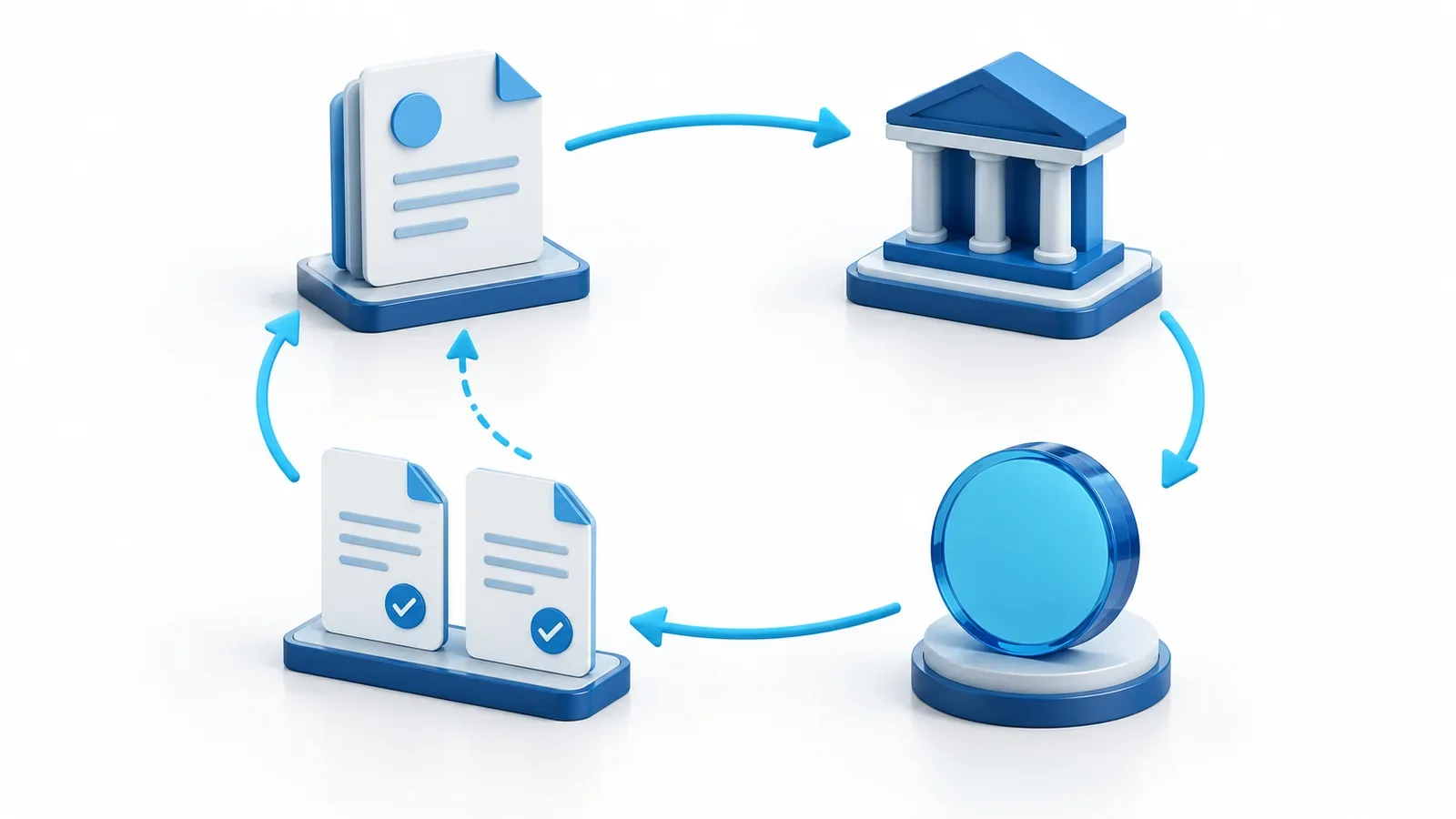
What to know
- The issuer and holder’s claim are more informative than a digital-looking interface.
- Retail and wholesale digital-money arrangements serve different participants.
- A comparison worksheet should record redemption, access and unresolved questions.
Digital currency is a broad phrase, so a useful first question is who owes what to the person holding a balance. This guide introduces a comparison method for reading announcements without assuming that every digital instrument carries the same rights. It is educational background, not a claim that any particular country has launched a new currency or that a specific product is suitable for you.
The Federal Reserve’s CBDC overview defines a central bank digital currency as a digital liability of a central bank available to the public, while distinguishing it from existing private forms of money. That provides one conceptual anchor. Actual projects can have different access models, so a definition should not be mistaken for a completed product specification or an issuance decision.
Separate the unit from the issuer
A dollar, euro or another unit tells you how a value is denominated. It does not, by itself, tell you which organization is responsible for honoring a balance. Two balances can use the same unit while involving different contracts and intermediaries. Start your comparison by writing the issuer or account provider’s legal name rather than the application’s brand alone.
Then write a plain-language sentence describing the claim: the balance represents an obligation of this party under these terms. If you cannot complete that sentence from reliable documents, mark it unresolved. Avoid filling the gap with the assumption that a familiar currency symbol makes the arrangement equivalent to cash or a conventional deposit.
Distinguish the participant group
Retail and wholesale arrangements are intended for different users. A system that allows financial institutions to settle asset transactions may not be available to households at all. Conversely, an app intended for ordinary payments needs customer-service and accessibility arrangements that are different from those of an institutional settlement platform.
This distinction helps decode headlines. A central bank enabling a wholesale experiment has not necessarily launched a new public wallet. A commercial bank recording deposits on a distributed ledger has not necessarily issued central-bank money. Check who may participate and what transaction the announcement actually describes before deciding that it belongs in a broader adoption story.
Ask how value moves back out
For each instrument, map how a holder obtains the reference currency or otherwise spends the balance. Identify whether that process is direct or uses another provider. A token may be technically transferable while conversion is limited by account eligibility, operating processes or the services available to a particular user. Transferability and redemption are related but separate questions.
An illustrative comparison can stay entirely on paper. Imagine that you need to pay an ordinary bill in your home currency. List the steps between each digital balance and that payment. If a route requires an exchange, currency conversion or bank payout, include it. Do not compare only the most convenient step of one system with the entire journey of another.
Keep technology and governance in separate columns
A ledger can affect how records are shared, verified and updated. Governance determines who may change rules, authorize access and resolve a dispute. Neither column replaces the other. A technically elegant design still needs accountable operation; a familiar institution still needs evidence that a new technical process works as intended.
Useful questions include how users recover access, which records establish ownership and what happens after an error. Answer them from current documents rather than from assumptions about whether a system is centralized or decentralized. Those labels can summarize a feature while hiding important differences in the actual service.
Produce an honest comparison
Your worksheet should finish with the issuer, intended users, claim, transfer process, exit path and open questions for each arrangement. It does not need a single winner. One model may fit an institutional transaction while another fits a different payment situation, subject to the applicable terms and safeguards.
When reading a new headline, update only the facts it actually establishes. A consultation, a pilot and a launch are different stages. Keep their dates and limits visible. Understanding digital money becomes easier when the analysis begins with obligations and use cases, then examines the technology that supports them.
Editorial note: AI-assisted original BijliCoin educational synthesis. Illustrative examples are invented for explanation, not measured results. This guide does not certify an asset or provide individualized financial or legal advice. Illustration is AI-generated conceptual artwork.
Sources & context
See our editorial policy or report a correction.