What to know
- The 8 October paper compares euro electronic money tokens and tokenized deposits.
- Its summary distinguishes bearer instruments from registered deposit relationships.
- Economic comparisons in research do not replace applicable legal classifications.
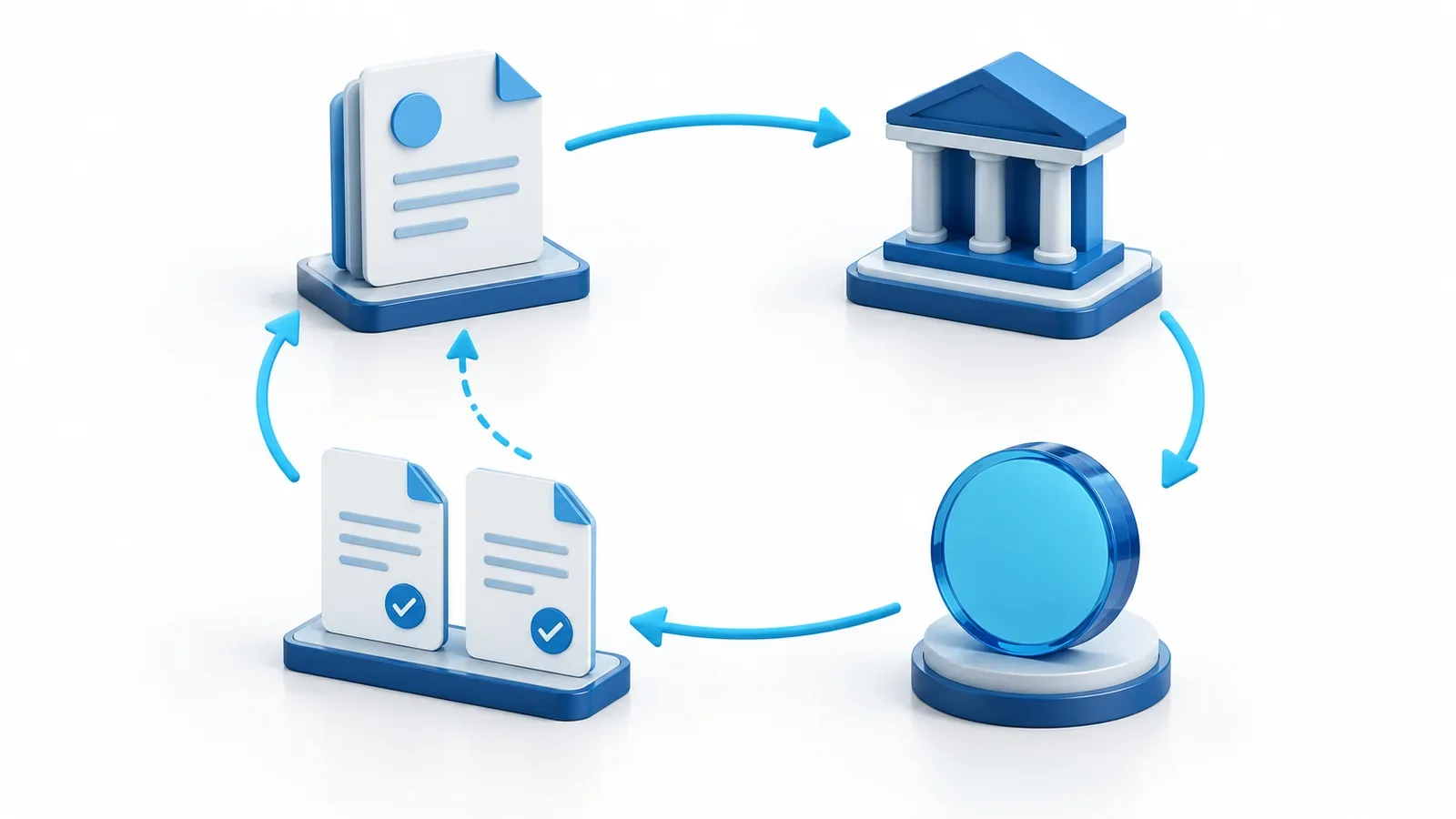
The Bank of Italy released Occasional Paper 1062 on 8 October 2026, comparing euro electronic money tokens with tokenized deposits. Authors Giuseppe Ferrero and Federico Guerra examine different issuer and holder structures, including bearer and registered arrangements. Their summary argues that economically similar instruments should receive comparable treatment. That is a research conclusion, not a new law or an official reclassification of every existing token.
When two interfaces hide different claims
The practical reader question is what a digital balance actually entitles its holder to receive. Two applications can display the same currency unit while recording different legal relationships. One might involve a bank deposit, another an electronic money claim and another an entitlement held through an intermediary. The appearance of the balance is a poor substitute for reading the underlying terms.
A useful comparison starts with the issuer, the holder’s identity and the process for transferring the claim. Then it asks what happens when the holder wants conventional money back. This approach is more revealing than grouping instruments by whether they use a blockchain. Technology describes how a record is maintained; it does not by itself settle every question about the claim.
Transfer design can affect the questions to ask
A registered arrangement may connect a specific customer to an account relationship, while a bearer-style design raises a different set of questions about who holds and transfers the instrument. The paper’s summary makes that distinction relevant to economic risk. It should not be stretched into a blanket statement that any one category is always safe or always unsuitable.
For an illustrative business procurement review, the comparison should include eligibility, transfer restrictions, redemption access and how a balance is evidenced during a dispute. If a product is described as deposit-like, the reviewer should still identify the exact institution and applicable terms. A marketing analogy is not enough to establish the protection attached to a particular customer’s funds.
How to use the paper without overreading it
Research can provide a framework for asking better questions while leaving implementation details unresolved. The paper’s published summary does not independently examine every available product, and its economic assessment is not individualized legal guidance. Readers should check the current regulatory framework and issuer documentation for the instrument they are evaluating.
The news value is the paper’s focused challenge to superficial categories: similar technology can carry different claims, and different labels can sometimes conceal similar economics. For readers of digital-currency announcements, that is a useful discipline. Start with the obligation and the redemption path, then examine the ledger, rather than assuming that a token’s name supplies a complete account of its risks or legal status.
Editorial note: AI-assisted original BijliCoin synthesis and analysis from linked primary evidence. Announced capabilities and plans are attributed, not independently tested. Illustration is AI-generated conceptual artwork.
Sources & context
See our editorial policy or report a correction.